
Conferences
Fraud Prevention at Scale: Frogo on Automation, Data and Operational Control

Here is a familiar reality for operators: as platforms scale, fraud scales with them. What once required manual effort and small groups is now automated, adaptive and increasingly difficult to distinguish from legitimate user behaviour. Against this backdrop, fraud prevention has shifted from a support function to a core operational discipline.
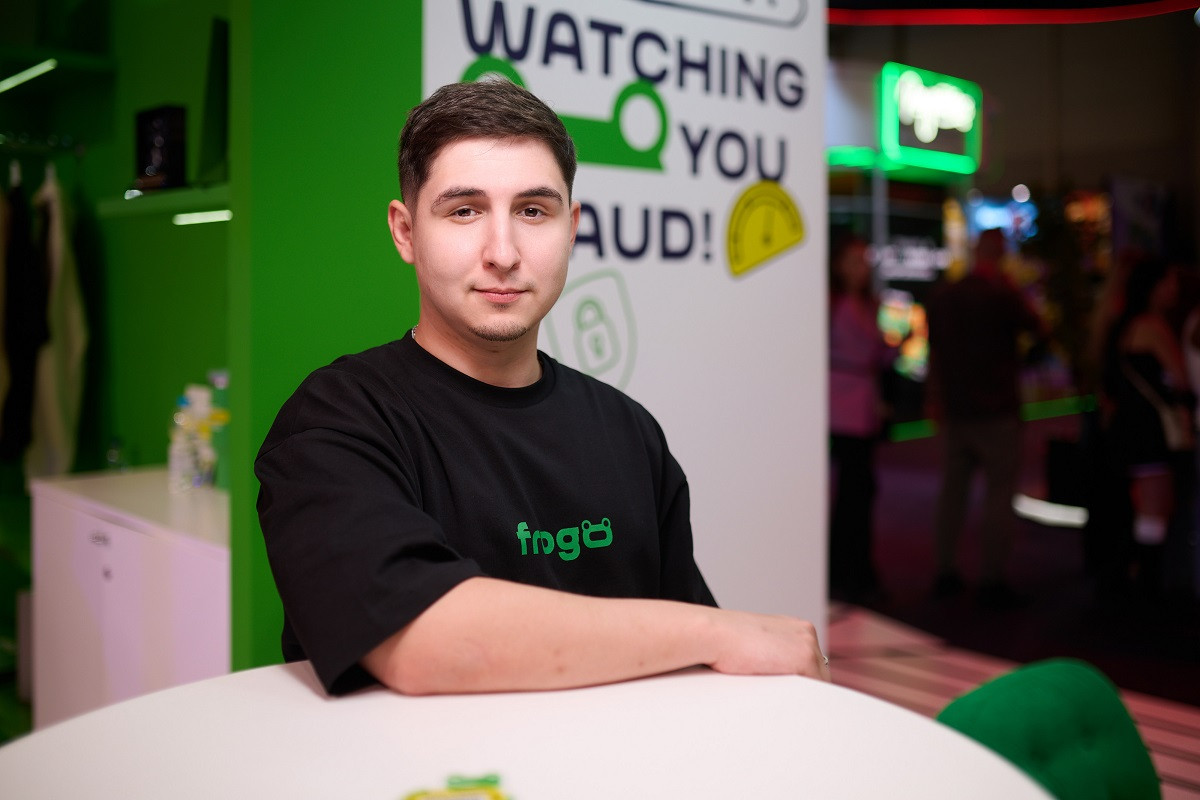
At ICE, European Gaming spoke with Kostiantyn Kryvka, Head of Operations at Frogo. The discussion focused on current fraud trends, the operational challenges teams face when scaling and how automation and data-driven tools are changing day-to-day anti-fraud work.
From an operational perspective, what are the most significant fraud trends you’re seeing across Frogo’s client verticals today?
Bonus abuse and affiliate fraud remain the most common issues across verticals. The notable change is not the type of fraud but the level of automation behind it. Fraudsters are increasingly using AI-driven tools to replace manual routines, allowing them to scale activity while maintaining behaviour patterns that resemble legitimate users.
This makes early detection more complex. To address this, Frogo focuses on identifying devices and environments first. Device fingerprinting allows us to detect bots, emulators and remote-controlled setups at entry. Beyond that, our scoring engine evaluates behaviour throughout the entire user lifecycle, combining financial indicators and behavioural triggers to identify anomalies in both new and existing accounts.
How does Frogo help operational teams detect and respond to emerging fraud schemes in real time?
Frogo is designed to operate with minimal manual involvement. Decisions are made automatically but effective results depend on two core elements.
The first is proper technical integration. When client systems are connected to the Frogo API and response actions are automated, risk decisions can trigger immediate outcomes without requiring manual review. This significantly reduces operational load.
The second element is risk policy configuration. Together with clients, we define thresholds and patterns that reflect their specific business logic. Once these are in place, ongoing work is limited to monitoring performance and adapting to new trends. We support this process through regular reviews of traffic data and shared recommendations based on broader market observations.
Can you share how data and graph-based tools inform day-to-day decision-making for anti-fraud operations?
Graph-based analysis provides visibility into relationships that are difficult to identify through standard reports. It allows teams to see connections between accounts, devices, payments and behaviours in a single view.
Operationally, this is not only useful for identifying fraud networks. It also supports proactive checks, such as identifying secondary accounts linked to high-value players or validating affiliate traffic quality. In practice, graph tools reduce investigation time significantly, turning complex checks into structured and repeatable processes.
In your experience, what operational challenges do businesses face when scaling fraud prevention and how does Frogo help overcome them?
One of the main challenges is the level of expertise required. Effective fraud prevention depends not only on tooling but on the ability to interpret data, understand statistical patterns and configure rules correctly. This skill set is often outside the scope of typical operational teams.
Frogo addresses this by handling the more complex analytical and configuration work within the platform. Clients can describe requirements in business terms, while our team translates those needs into scoring logic and detection models. At the same time, we provide training so operational teams can confidently use investigation and reporting tools from the outset.
Looking ahead, what innovations or process improvements do you see shaping the future of operational fraud management?
Automation will continue to play a central role. Any process that can be reliably automated should be removed from manual workflows to reduce cost and operational risk.
At the same time, we see increased acceptance of delegation. Not every business needs to build deep in-house expertise across every aspect of fraud prevention. Relying on specialised partners for certain functions is becoming a practical and cost-effective approach. Frogo reflects this model by combining technology with ongoing analytical and operational support.
As discussions at ICE made clear, fraud prevention is no longer a reactive function. It is an operational capability that must scale alongside the business itself.
Frogo’s approach reflects this shift: automation where possible, data-driven decisions where necessary and expert involvement where it adds the most value. For operators navigating increasingly complex risk environments, this balance is becoming less of an advantage and more of a requirement.




